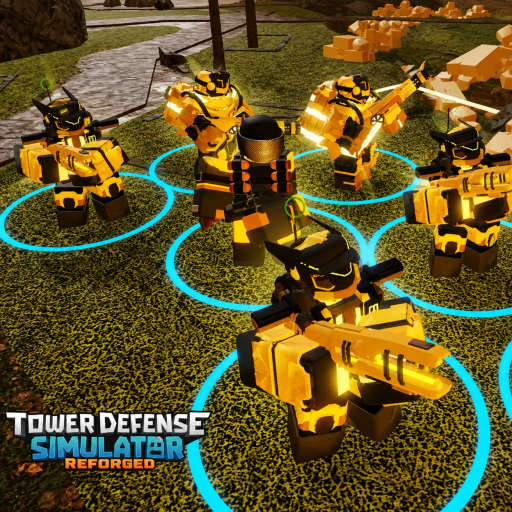
TDS Reforged Fallen Mode Tier List
Tower rankings specifically for Fallen Mode's modifier cycling and adaptation demands.
This tier list covers tower effectiveness specifically in Fallen Mode, where modifier combinations cycle unpredictably and real-time adaptation matters more than executing a fixed strategy. Unlike standard modes where you can optimize for known conditions, Fallen Mode throws multiple modifier scenarios at you in sequence, requiring towers that maintain value across shifting enemy compositions and battlefield constraints.
How Fallen Mode tiering differs
Standard tier lists optimize for consistency under known conditions. Fallen Mode requires towers that perform across multiple modifier scenarios, making versatility more valuable than raw ceiling. A tower that dominates under Tank modifier but fails under Swarmer ranks lower than a tower that performs solidly across both. The difference is that Fallen Mode tests your ability to adapt rather than your ability to execute a predetermined strategy perfectly.
The modifier cycling means you cannot simply build toward a late-game composition and hold on. You need towers that contribute meaningfully in early waves under one modifier set and then shift contribution patterns when modifiers change. This is why sustained DPS often outperforms burst damage—the timing of burst windows becomes unpredictable.
S tier — versatile performers
- Golden Minigunner — sustained DPS that works under Tank, Fast, and Swarmer modifiers. The consistent fire rate provides value regardless of enemy composition. Its steady damage output means it remains relevant even when enemy HP pools shift dramatically between modifier phases.
- Slowing Towers — control package essential for Fast modifier and multi-lane pressure under All Paths. The flex coverage justifies slot investment across modifier scenarios. Slowing towers provide baseline value that compounds with other tower selections, making them safe early picks.
- Enforcer — burst damage for Boss modifier and late-wave clutch moments. High skill ceiling rewards precise placement timing. While its burst nature can feel inconsistent, the raw damage potential means it handles unexpected modifier combinations where overwhelming force shortens engagement time.
A tier — strong with conditions
- Golden Ace Pilot — air coverage and broad targeting handle Hidden and multi-lane All Paths scenarios. Strong when enemy variety increases. The Ace Pilot’s sweeping attack pattern provides incidental value against ground enemies while focusing on aerial threats, making it adaptable when modifier shifts introduce new enemy types.
- Vanguard — multi-projectile pattern provides splash-like effectiveness against Swarmer while maintaining single-target capability for Boss modifier. The Vanguard’s projectiles split between targets, giving it natural resilience against modifier changes that shift enemy count versus enemy HP.
- Card Dealer — rework changes have improved its Fallen Mode viability for sustained economy under variable pressure. The Card Dealer’s income generation remains consistent regardless of modifier conditions, making it a stable foundation for adapting loadouts mid-session.
B tier — situational value
- Engineer turrets — chip damage accumulates under Swarmer but struggles against Tank modifier HP pools. Engineers provide steady pressure but lack the raw output needed when modifiers shift toward high-HP enemies. Their value is in sustained damage over extended engagement windows rather than burst.
- Golden Toxic Gunner — specialized for environmental pressure modes, less consistent under Fallen Mode’s cycling modifiers. The toxic DOT provides some baseline damage even if primary hit damage falls short, but the cycling nature of Fallen Mode means DOT effects may not fully utilize their potential.
- Economy towers — fund carry transitions but risk becoming obsolete under aggressive Fast or Swarmer modifiers that demand immediate board presence. Economy investments work when you have time to scale; Fallen Mode’s unpredictability can compress that timeline.
C tier — limited Fallen Mode utility
- Single-role carries — glass cannons that only perform under specific modifiers. Fallen Mode’s variety exposes their limitations. These towers rank highly under optimal conditions but become liabilities when modifier shifts invalidate their primary strength.
- Niche counters — detection-only or condition-specific towers that cannot adapt when modifier focus shifts. A tower designed to handle one specific scenario becomes a wasted slot when that scenario is not active.
Fallen Mode loadout principles
- Prioritize towers that perform across multiple modifier types rather than those optimized for single scenarios
- Keep one flex slot open for real-time adaptation needs rather than locking in all five slots before the match
- Favor sustained DPS over burst because modifier timing is unpredictable and sustained pressure compounds over time
- Include control elements for Fast modifier survival since Fast modifier appears frequently and can overwhelm undefended paths
- Test loadouts under at least three different modifier combinations before committing to a build for Fallen Mode
The most successful Fallen Mode players treat their loadout as a framework for adaptation rather than a fixed solution. They understand which towers provide baseline value under any conditions and which towers require specific modifier contexts to shine.
Related pages
- Fallen Mode Guide — complete strategy for the mode
- Hardcore Tier List — Hardcore-specific rankings
- Overall Tier List — general-purpose rankings
- Tower Roles — role definitions for loadout building
Fallen Mode rewards players who understand why towers perform across conditions, not just which towers rank highest under optimal scenarios.
Frequently Asked Questions
Quick answers to the most common questions.
Why is versatility more important than raw power in Fallen Mode?
Fallen Mode cycles through modifier combinations unpredictably. A tower optimized for one modifier fails when conditions shift. Versatile towers maintain value across combinations.
Should I always bring slowing towers to Fallen Mode?
Yes. Fast modifier appears frequently and the control provided by slowing towers remains valuable under other modifier conditions as well.
Can I skip economy towers in Fallen Mode?
Not recommended. Economy funds carry transitions, and Fallen Mode's unpredictable timing means you need resources to adapt. Just keep economy lean so it does not starve early defense.
How does this list compare to Hardcore tier list?
Hardcore tier list optimizes for fixed scenarios. Fallen Mode rankings favor versatility and adaptation over raw ceiling under known conditions.
What is the most important skill for Fallen Mode?
Real-time adaptation. Reading modifier shifts and adjusting your focus between offense and defense is more critical than executing perfect placement.